


07 Jun Guide to Permanently Laser Marking Plastic Materials
To prevent tampering with your plastic components and reduce the risk of counterfeiting, use permanent marking solutions. Marking plastic for traceability can:
- Protect intellectual property for components in electronic devices.
- Promote patient safety in medical devices.
- Ensure product cleanliness and authenticity in personal care products.
- Verify the integrity of product packaging for food and beverages or pharmaceuticals.
- Authenticate automotive parts and their integrity.
- Prevent counterfeiting of identification cards.
- Allow for quality control of industrial components used in machinery and other equipment.
Why Permanent Marks Are Important
Most manufacturers have plastic parts that need some type of identifying mark. Marking on plastic materials can add a unique challenge to the process of tracking and identification. Oftentimes, the manufacturer uses sticky paper labels on their plastic parts but finds that this method is not the best option. A label can tear off, can become dirty and unreadable, the surface may not allow the label to stick, or the paper can get wet and simply rub off.
Permanent marking is the most desired option for all manufacturers that plan to track or record information about a part. Marks can prevent tampering and counterfeiting with:
- Deterrence features: Clearly visible and permanent markings can deter tampering when individuals see the unique identifier.
- Traceable identifiers: Identifiers like barcodes or serial numbers allow for traceability throughout a product’s lifecycle to help monitor for tampering.
- Authentication identifiers: Permanent markings can help consumers confirm a product’s authenticity to know they’re avoiding a counterfeit.
To achieve permanent marking, the marking must be done directly onto the plastic material. This can be accomplished with several different methods.
How to Permanently Mark Plastic Parts With Scribe Markers
For true permanent marking, the manufacturer can scribe the mark into the plastic. This is a mechanical process that drives a scribing pin across the surface and engraves the mark into the plastic without puncturing it. The depth of the mark in the material is directly influenced by the pressure exerted by the pin. This method allows for the creation of even faint, scratched characters.
The scribe marker can work on most plastic applications, including ABS, Delrin, polypropylene, PVC, HDPE and many other types of plastic materials. Easily integrate any variety of markers into your manual or automated operations. Produce accurate and clean markings and crisp text that is easy to read.
Permanent Marking on Plastic With Laser Marking Systems
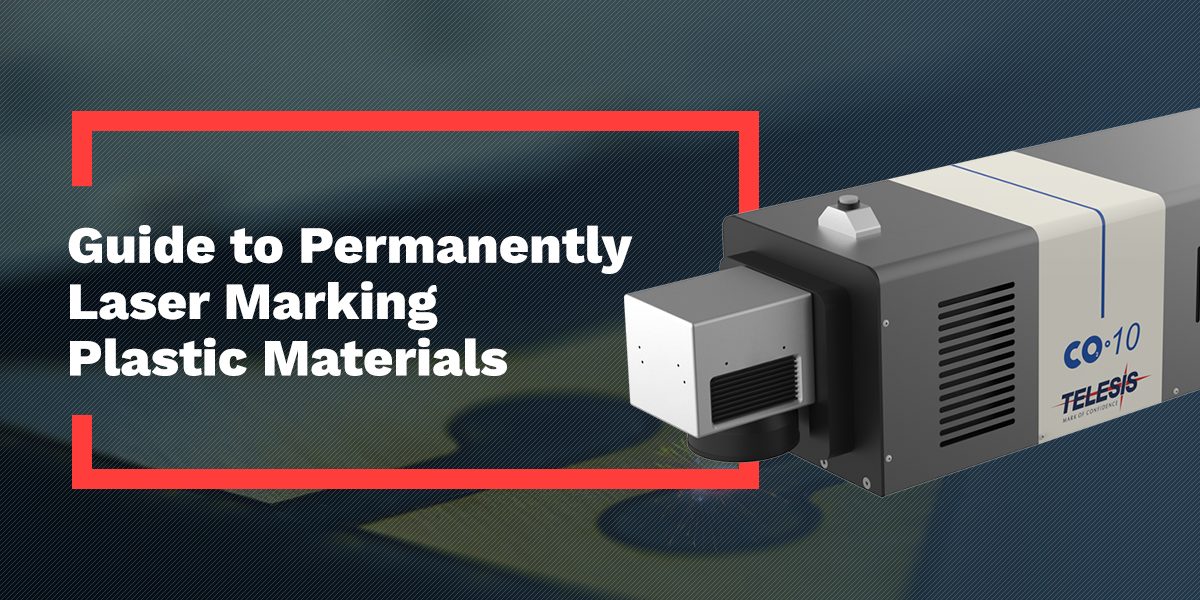
Another true permanent marking method would be to use a laser to mark the plastics. A laser can give you a melted mark or a high-quality surface mark with very high contrast. The laser can be absorbed into the plastics to create contrast without burning or foaming the material. This creates a very smooth mark that is critical for some applications, especially for medical implants. The laser can also produce customer logos, codes, boxes and microprinting.
Because plastics have a wide range of colors, densities and material designs, specific lasers work better with different materials. Your options include:
- The Green Laser (532 nm) has a very high absorption ratio that can produce beautiful marks on PVC, ABS and polystyrene.
- An ultraviolet laser (375 nm) is perfect for marking on HDPE material. HDPE material is the standard material used in pill bottles, shampoo, health and beauty containers and many of your pharmacy containers.
- Fiber and Vanadate lasers (1064 nm) work well on many high-density plastics such as Delrin, ABS or many of your automotive material plastics. Even a very detailed diagram or photo can be printed on the plastic material for a permanent option.
Laser marking is an environmentally friendly option that reduces your production waste. Tools like fiber lasers are no-contact, making them perfect for industries like the medical sector or food and beverage producers, where avoiding contamination is key.
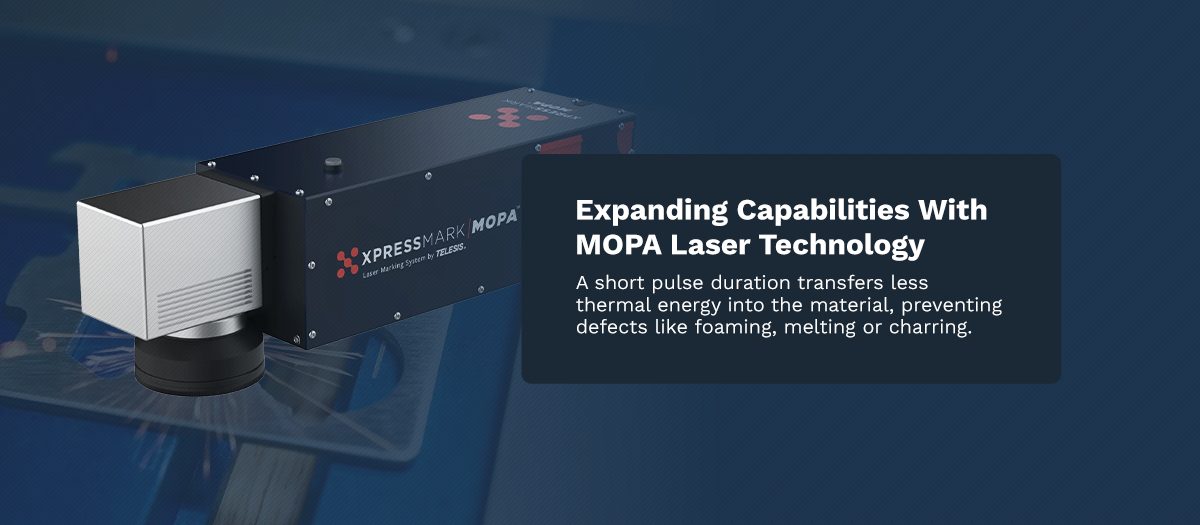
Expanding Capabilities With MOPA Laser Technology
With its adjustable pulse duration, master oscillator power amplifier (MOPA) laser technology offers even more advantages for plastic marking. Using the MOPA laser, operators can change the laser pulse width from nanoseconds (ns) to microseconds (µs). This control is crucial when marking on heat-sensitive plastics.
A short pulse duration transfers less thermal energy into the material, preventing defects like foaming, melting or charring. The result is a high-contrast, permanent mark created without damaging the surface texture. This is crucial for both aesthetic and functional parts.
Industry-Specific Applications for Laser Marked Plastic
Numerous industries, from medical devices to automotive, need plastic laser marking and engraving:
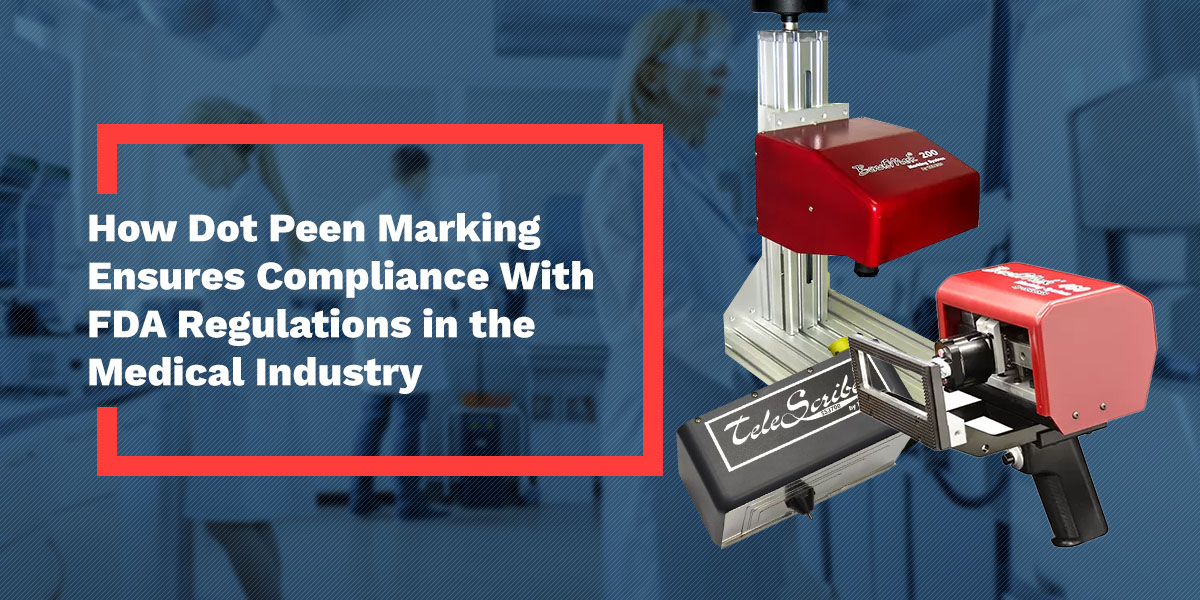
- Medical device manufacturing: The FDA’s unique device identification (UDI) system requires medical devices for reprocessing to have permanent, direct part marking. This ensures full traceability. Materials like PEEK and PPSU, used in surgical tools and implants, must have marks that can withstand repeated autoclave sterilization and passivation cycles without fading or degrading.
- Automotive components: Traceability is essential in the automotive industry, where under-the-hood components are made from high-temperature engineered plastics. Marks need to be able to resist heat, fluids and vibration. Additionally, lasers are used for “day/night” applications, such as backlit dashboard buttons, where a precise layer of paint is ablated to reveal a translucent symbol.
- Aerospace and defense: This sector uses specialized flame-retardant plastics. Any marking process must be non-flammable and cannot compromise the material’s structural integrity or safety specifications.
Laser Source vs. Material Compatibility
| Laser Type | Wavelength | Thermal Impact | Best For |
| UV | 355 nm | Low (Cold Marking) | Heat-sensitive plastics (HDPE, PVC), medical devices, ICs |
| Green | 532 nm | Low | Soft plastics, reflective materials, precious metals |
| Fiber/MOPA | 1064 nm | Medium-High | High-density plastics (ABS, Delrin), metals, elastomers |
| CO2 | 10,600 nm | High | Organic polymers (Acrylics), wood, paper, removing coatings |
Contact Us for More Information
Telesis Technologies, Inc. offers a full line of Scribe and Laser markers for high-quality permanent laser marking on plastic materials. We are a one-stop shop, offering integration capabilities and comprehensive service support.
If you would like to find out about which machine would suit you and your specific needs better, get in contact with us. Our team of experts can guide you through our production range and make a recommendation according to what materials you work with and what kind of end result you are looking for.
Discuss your part marking needs with an expert today // Download the Telesis Product Guide